Watch a Bull Shark Flip a Fisherman’s Kayak; Was It Actually Attacking Him?
© (©)
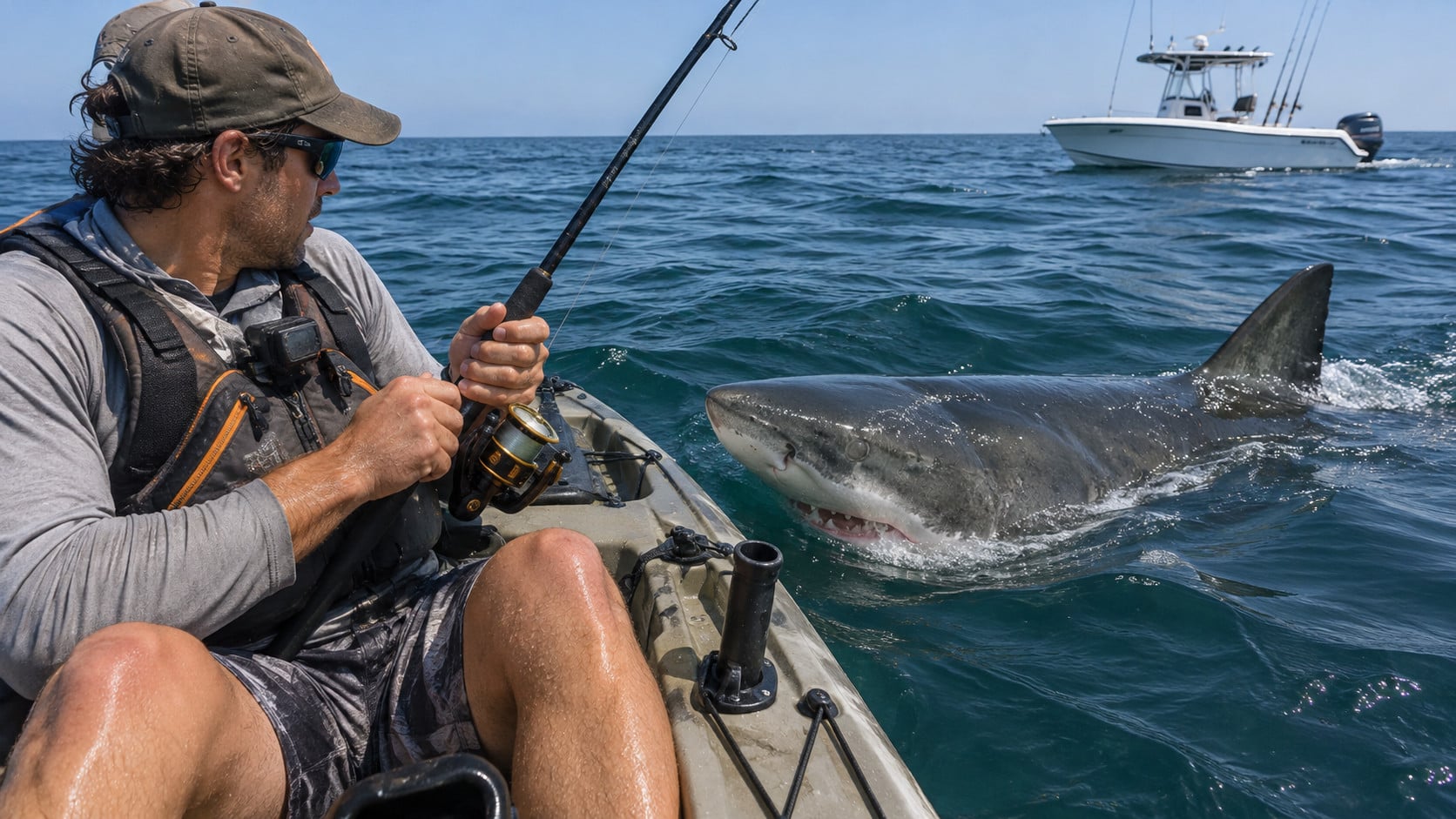
A large shark circling a kayak would be unnerving enough. A shark powerful enough to overturn it is the kind of encounter most anglers would prefer to experience through a screen. That is exactly what happened to fishing captain Ben Chancey off Stuart, Florida—but the video needs some important context.
The bull shark was not stalking an unsuspecting kayaker. Chancey had hooked the animal, and its struggle on the line pulled his small craft across the water before sending him overboard.
Watch the Bull Shark Overturn the Kayak
Footage originally published by Chew On This Fishing Charters.
The video shows the shark towing and turning Chancey’s kayak while people aboard a nearby support boat watch. When the shark changes direction beneath the smaller craft, the kayak rolls and Chancey falls into the water. He immediately swims toward the support boat and climbs aboard without being bitten.
That alone would have been enough excitement for most people. Chancey, however, helped turn the kayak upright, climbed back in, and finished reeling in the shark. The animal was then released.
What Caused This Close Encounter?
The incident occurred in 2015 during a charter trip off Stuart. Chancey told Patch that the group had been fishing for goliath grouper when one of the fish released the bait. An approximately 8.5-foot bull shark took it instead.
Once hooked, the shark’s strength turned the outing into what anglers sometimes call a “sleigh ride,” with the fish pulling the lightweight kayak. The shark was not circling the boat because it had decided to hunt Chancey. It was attached to his line and attempting to swim away.
Was the Bull Shark Attacking Him?
The available footage and contemporary reports do not show the shark trying to bite or pursue Chancey after he entered the water. The shark overturned the kayak as it fought against the fishing line, and Chancey reached the nearby boat unharmed. Calling the incident a shark attack would therefore be misleading; it was a dangerous fishing encounter with a hooked wild animal.
Bull sharks deserve caution. They are large, powerful predators that commonly inhabit warm coastal and estuarine waters. However, NOAA explains that people are not part of sharks’ normal diet and that sharks rarely attack humans.
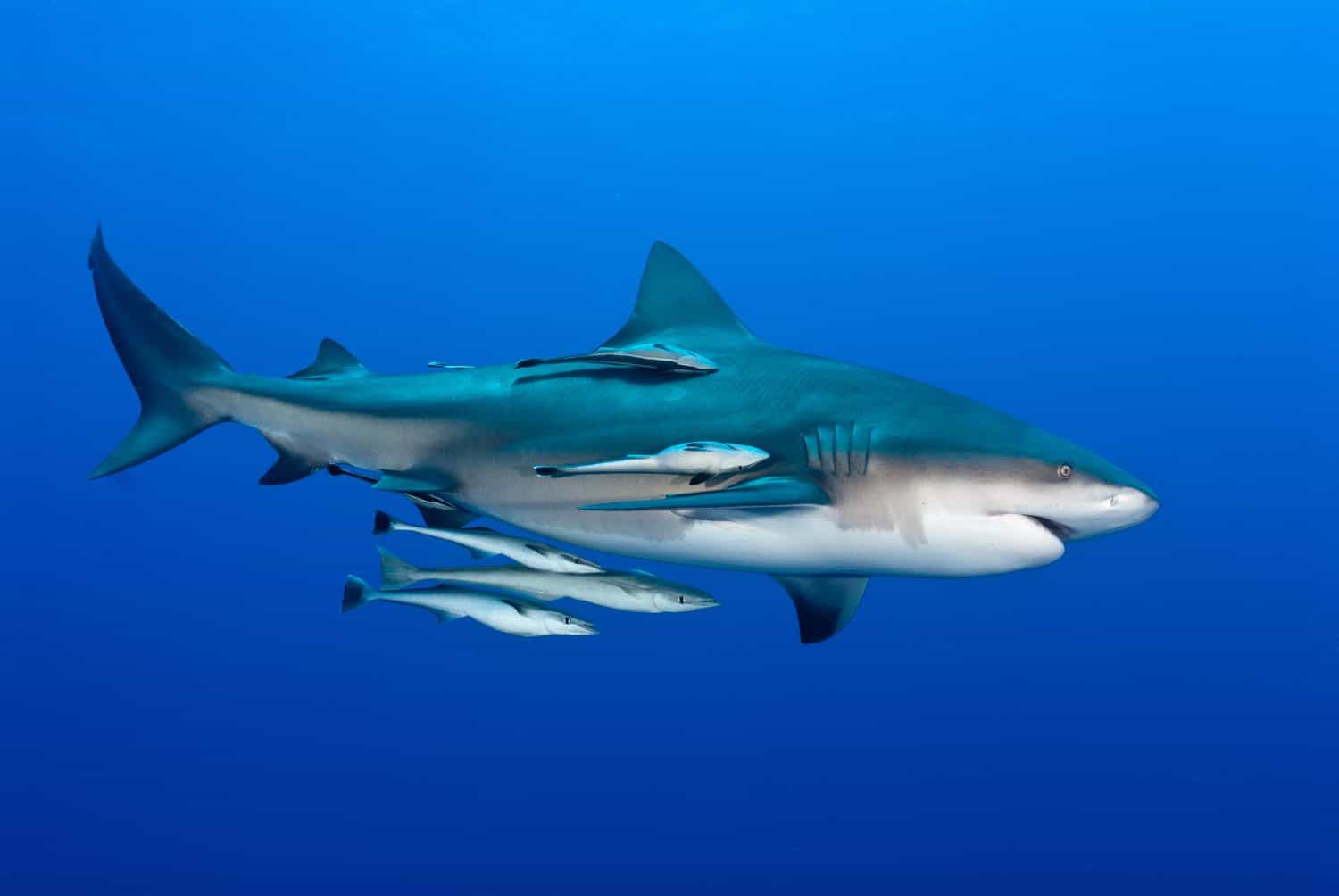
There’s an amazing amount of life under the oceans, much of which has yet to be discovered.©Fiona Ayerst/Shutterstock.comWhy Do Sharks Approach Fishing Boats?
Bait, hooked fish, and discarded catch can offer sharks an easy meal. NOAA calls the removal or damage of a hooked fish by a shark “depredation.” The agency says emerging evidence suggests that some sharks may learn to associate boat engines, fishing gear, or discarded fish with feeding opportunities. Bull sharks and sandbar sharks are among the species frequently implicated in depredation involving recreational snapper and grouper fishing in the Atlantic.
That does not mean every shark near a fishing boat is looking for trouble. There are more than 500 shark species, and the overwhelming majority have never been linked to a bite on a person.
What Should an Angler Do After Hooking a Large Shark?
Chancey was an experienced fishing captain working beside a support boat, but the video is not something casual kayak anglers should try to recreate. A large hooked shark can change direction suddenly, pull a small vessel off course, or bring the line and hook dangerously close to the angler.
The Florida Fish and Wildlife Conservation Commission advises anglers to cut the line as close to the hook as possible when a fish is especially large or agitated and the hook cannot be removed safely. Regulations vary by species and location, so anglers should know the rules before heading out—and remember that no catch is worth capsizing a kayak beside an 8.5-foot shark.
Source: Nature
